


The Lost Beat - Why Modern Tango is different from Tango of the Milongas.
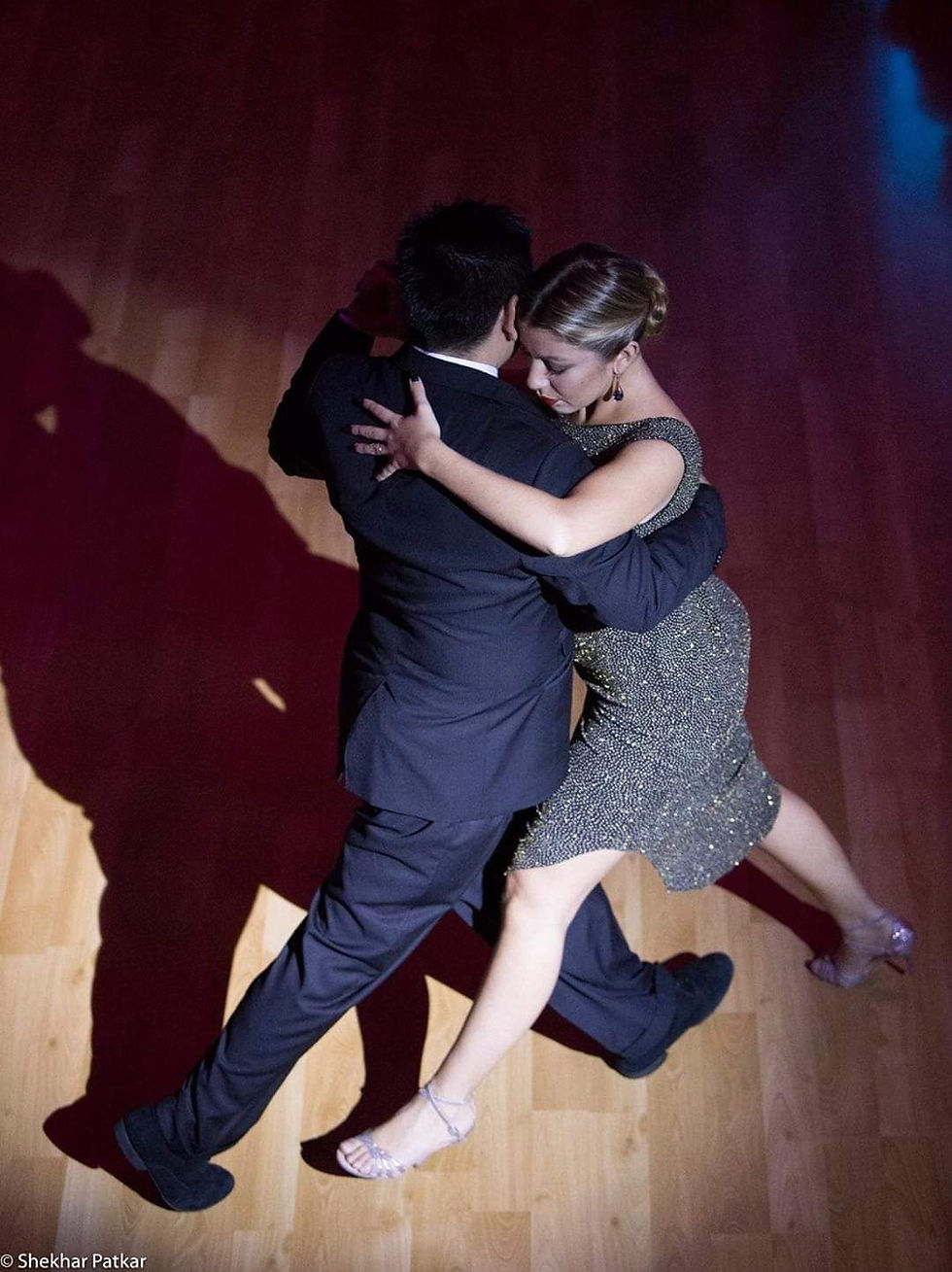
Background
From the mid 1950s Tango declined under a mix of influences. Political repression resulted in the banning large public gatherings, and frowned on Tango since it had been used by the Peron’s as emblematic of popular culture. This occurred at the same time at the introduction of television and the rise of Rock and Roll that swept youth culture around the world. The orchestras that survived turned to radio concerts, where dance music was not a priority.
Tango didn’t just shrink — it vanished from mainstream culture.
But Tango didn’t die — it went underground. Despite the collapse, Tango survived in private house parties, small neighbourhood clubs and exile communities.
This underground survival was the seed for the 1980s Tango revival.
After 1983, with the fall of the notorious military junta in Argentina, Tango surged back to life in Buenos Aires and internationally. The milongas re-emerged in Buenos Aires, at the same time as the stage show “Tango Argentino" began touring Europe before making its way to Broadway. It caused an international cultural awakening. It was followed over the next 20 years by some excellent stage shows, including "Tango Pasion" that delighted Australian & European audiences. To supplement their incomes, performers (Copes/Nieves, Virulazo, Zotto/Plebs and other world-class dancers) would teach classes in what people saw on the stage but what, in Argentina, was referred to as “Export Tango”. (Let’s call it X-Tango).
Many of us were intrigued by this powerful, emotional phenomenon, and people from Europe, Asia, the USA and Australia/NZ travelled to the mecca of Tango, Buenos Aires to discover more.
What we found was the Authentic Golden Age Argentine Tango (We’’ll call it AA-Tango) in the crowded milongas of Buenos Aires, a totally different phenomenon and experience from the shows that enticed us initially. By the late 1990’s, small, intimate Tango shows abounded in Buenos Aires, alongside the late-night milongas in popular venues.
Following the English movie, “The Tango Lesson”, the enterprising movie cast cashed in on its popularity with the CITA Congress, with classes every day and night, and with late-night milongas, for a fortnight of total immersion and experiences. Hundreds of tourists attended this and other events that followed. It is also notable that the stars of that movie were, at the time, experimenting with dancing to flowing, long-stepping, non-rhythmic Piazzolla music that was enjoying success touring Europe and with his “New Tango” jazz-fusion at Montreau Jazz Festival. Even then, at our first Buenos Aires milonga in La Viruta, the young dancers were imitating Salas, Frumboli & Naviera from the movie. It felt strange, since we had started dancing AA-Tango by that time.
But, for outsiders (European, Asian, Australian/NZ and USA), it was confusing. Many wanted to dance what they had seen in shows. Enterprising Argentine performer/dancers were only too pleased to sell a hybridised version of performance Tango as a social dance, knowing that it was not possible to pass on the deeper culture and passion of Tango in a few short lessons.
After the economic crisis of 2001, dancers from Argentina began flooding the world, demonstrating and entertaining participants in a weekend or week of workshops and demonstrations, teaching what they thought people wanted to know. Many remained in countries all over the world, establishing dance schools where they live, but continuing to teach this new hybrid dance.
X-Tango was born.

Whilst they continued to play traditional music, and use the language of Tango, “sensual, passionate, intimate”, The dance had already begun to morph into a completely different dance, more aligned with more rigid cultures, just as it had done 100 years before, when “Ballroom Tango” was born. It is essentially a semi-choreographed dance combining Classic Tango with learned figures and decorations, not unlike any partner ballroom dance of the 1920’s to 1960’s around the world, still practiced in its exaggerated form as competitive Dancesport.
This competitive dynamic was encouraged and emphasised with the establishment of “Tango Mundial” , the Tango World Championships, established by the Buenos Aires city government in 2003 to formalise and promote tango as a global cultural export. The first social/salon category was won by Enrique Husares y Gabriela Sanguinetti, emphasising the long-stepping performance style, also known as the Villa Urquiza (more suburban) style, although maintaining the close embrace of Authentic Tango.
Oddly, the following year gave a nod to the Authentic Social Tango of the city milongas, with Coca y Osvaldo Cartery anointed the winners.
But, as with Dancesport, as time goes on, competitors must add more “look at me” moments to attract the attention of the line of judges.
Added to this, the 2000’s saw a rise in experimental Latin/jazz/Tango fusion bands. This gave rise to experimental, even more choreographed “club styles” of Neo-Tango and Nuevo Tango. The beat was gone.
THE LOST BEAT
Whilst they can look similar to the viewer, the technique for dancing X-Tango and “Classic Tango” are 100% opposed.
X-Tango is more externalised, because its origins were performance for an audience. The embrace is often offset, or broken to allow the lady to walk forward, and perform figures to be admired by onlookers.
In X-Tango the embrace is upright, and the man pushes from the hips, with a long step, well inside the lady’s space. The basic technique is step>push. As you can see from the many photos and videos of this dance, the point of balance is at the end of the step, or the beginning of the next step. The middle beat is not marked at all as the step flows straight across the two main beats.

Changes of direction (turns, ochos, giros) can only be executed, often after coming to a stop, at the end of, or the beginning of the next full step, or by pushing the lady away from the embrace. The “lead” can shift between body movement and hand/arm guiding.
This technique is a "mirror dance" in the traditional ballroom dances of Foxtrot and Waltz. It is a combined lead and follow together with a change of lead for non-linear figures. This is often exaggerated into stop and wait for the lady to execute particular figures, often characterised as "expression".

This is not to say it is cannot be enjoyable and attractive, when danced well. It’s just a new dance.
BUT:
The middle beat lost its value in the dance.
And, the middle beat is critical to the dance that was developed and refined through the first half of the 20th century.
Understanding Authentic Tango of the Milongas
The objective of AA-Tango is different from X-Tango. Whilst X-Tango retains vestiges of AA-Tango, it is more externalised, with exaggerated figures (ganchos, volcadas, exaggerated slow sables and decorations etc.) a common part of the dance.
AA-Tango looks simple and introverted because of:
* Its inward embrace
* Its introspective technique
* Its lyrical themes
* It is danced in tight spaces
* It is more circular than linear
Unlike E-Tango, it:
* Faces inward all the time
* Uses a closed, chest‑to‑chest embrace
* Has minimal external showmanship
* Prioritises connection over display
* Circuation in the room is a continual flow
* Couples communicate, resulting in coherence
This creates an introverted visual impression, even when the dancers feel joy, playfulness, or intensity.
Tango is basically a private conversation happening in public.
AA-Tango prioritises:
* Connection
* Intensity
* Presence
* Emotional honesty
* A shared moment that doesn’t need words
The technique required for AA-Tango is different from X-Tango. The man’s steps are short, rarely invading the lady’s space. The dance circulates more in an even flow, since there is no need to stop to give the lady time to change direction or execute figures.
The embrace is more A-frame, chest-to-chest, but with space at the feet for the lady to comfortably move and change direction, without breaking the embrace. Every change of direction for the lady - back, forward, around, ocho - is marked with a change of direction from the chest. Once an invitation to change direction is made, the man must follow the lady to its completion, between one or more steps.
The walking technique is push > wait > step, the opposite of X-Tango.

The Tango conversation is more immediate. The invitation/acceptance is planned and created across one simple step (two beats of music), even when walking in double time. The man suggests a new direction across the first beat of the music, the lady creates the step in the second half of the step.
This means that both partners must be on their centre of balance at the midpoint of the step, on the small beat. It requires the dancers to move very accurately across two beats of music.
It means that the men must be completely aware of where the lady is, marking every change at exactly the right split-second, before she moves through the second half of the step. The lady, in return, must develop a highly-tuned sensitivity to his body movement, not anticipating the next step, because it can stop or change at any time.

THE LOST (small) BEAT is the most important part of the AA-Tango dance rhythm, because, as many great dancers have noted, “everything happens between the steps”.
The lost beat has found its purpose again, and...........

Comments